

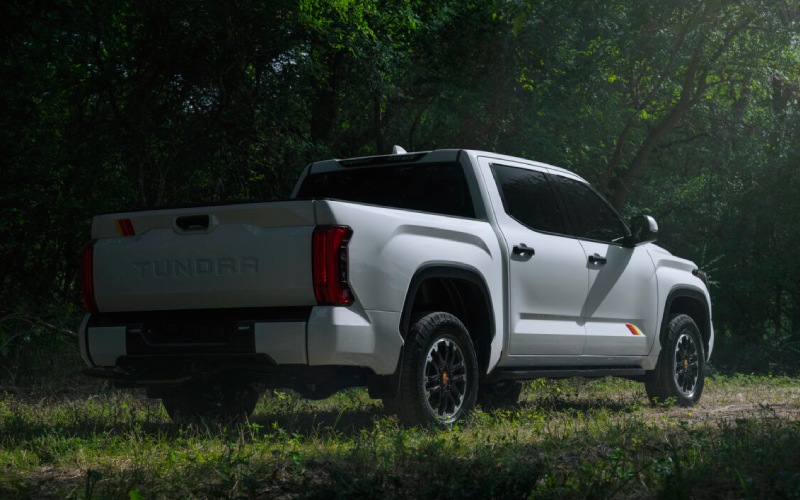
Herb Chambers Toyota of Boston - Is the Toyota Tundra or Ford F-150 the better full-size truck for Boston, MA drivers?
When Boston-area truck shoppers compare the 2026 Toyota Tundra and the 2026 Ford F-150, the question is rarely just, “Which truck is stronger?” A better question is, “Which truck gives me the most confidence for the way I actually drive?” Full-size pickups are expected to handle towing, hauling, commuting, family duty, and weekend travel without feeling like single-purpose tools. The Ford F-150 has a long-standing reputation and offers high maximum capability in select configurations, but the Toyota Tundra stands out because it blends modern power, smart engineering, useful technology, and everyday comfort in a way that feels especially well matched to Greater Boston life.
For drivers who travel between Boston, Cambridge, Somerville, Medford, Woburn, and the North Shore, a truck needs to be more than capable on paper. It should feel composed in traffic, easy to maneuver in tight spaces, comfortable on longer highway stretches, and ready for towing or hauling when the schedule demands it. That is where the Tundra makes a strong impression. Toyota’s focus on twin-turbo powertrains, available i-FORCE MAX hybrid performance, a durable composite bed, and advanced driver-assistance features gives shoppers a compelling alternative to the F-150.
Which truck feels better suited to daily driving around Boston?
The Tundra’s biggest advantage for daily driving is its overall balance. Toyota equips the truck with a multi-link rear suspension using coil springs, which helps improve ride comfort, towing stability, and handling dynamics. That matters in and around Boston, where drivers often deal with uneven pavement, tight ramps, quick lane changes, and crowded parking areas. A full-size pickup should feel strong, but it should not feel unnecessarily tiring to drive every day.
The Ford F-150 is also a highly capable truck, and its lineup offers many configurations. However, the Tundra’s more focused engineering approach can make choosing the right truck simpler. Rather than sorting through a long list of powertrain personalities, shoppers can focus on Toyota’s i-FORCE twin-turbo V6 or the available i-FORCE MAX twin-turbo V6 hybrid powertrain. Both are designed to deliver responsive performance, while the i-FORCE MAX adds especially impressive torque for confident acceleration and towing.
How do the powertrains compare?
The 2026 Toyota Tundra offers two key powertrain directions. The i-FORCE twin-turbo V6 produces up to 389 HP and 479 lb.-ft. of torque, while the available i-FORCE MAX twin-turbo V6 hybrid powertrain produces 437 HP and 583 lb.-ft. of torque. That available torque figure is a major reason many shoppers favor Tundra. It gives the truck a confident, responsive feel when moving away from a stop, merging onto I-93, or towing equipment for a project or trip.
The 2026 Ford F-150 offers several powertrains, including EcoBoost® V6 choices, a 5.0L Ti-VCT V8, a PowerBoost® Full Hybrid V6, and Raptor®-specific performance engines. That variety is impressive, and some F-150 configurations post higher maximum towing or payload figures. Still, Toyota’s advantage is how naturally the Tundra’s powertrains fit the truck. Tundra does not need a V8 to feel strong, and the available hybrid system is tuned for added power rather than simply serving as a specialty option.
- Tundra i-FORCE strength: Up to 389 HP and 479 lb.-ft. of torque from a twin-turbo V6.
- Tundra i-FORCE MAX advantage: Available 437 HP and 583 lb.-ft. of torque for powerful response.
- Ford F-150 variety: Multiple gas, hybrid, and high-performance options for different needs.
Which truck is better for towing and hauling?
Ford earns attention with a max available towing rating of 13,500 lbs. and a max available payload rating of 2,440 lbs. in select configurations. Those are strong numbers, and shoppers with very specific heavy-duty requirements may want to examine configuration details closely. However, many truck buyers do not tow at the absolute maximum limit every day. For those drivers, the Tundra’s max towing of 12,000 lbs. and max payload of 1,850 lbs. provide serious real-world capability.
Just as important, Toyota supports towing with useful available technology. Trailer Backup Guide With Straight Path Assist uses sensors and cameras to help keep a trailer moving straight while backing up. Tundra also offers an Integrated Trailer Brake Controller on select grades, along with selectable driving and TOW/HAUL modes. These features help make towing feel more approachable, especially for drivers who may tow regularly but do not want the process to feel complicated.
What about bed durability and truck utility?
The Tundra’s standard aluminum-reinforced composite bed is one of its most practical advantages. It is designed to help shield against dents, impacts, dings, and rust, which is valuable for owners who actually use a truck bed for tools, materials, sports gear, or home improvement supplies. Bed lengths of 5.5-ft., 6.5-ft., and 8.1-ft. give shoppers flexibility depending on cab and configuration needs.
The Ford F-150 offers useful innovations as well, including the available Pro Access Tailgate and available Pro Power Onboard™. Those features can be appealing for job-site use and mobile work. Even so, the Tundra’s composite bed gives every model a strong foundation for long-term utility. For drivers who want durability built into the truck from the start, Toyota’s approach is easy to appreciate.
Which truck has the more appealing cabin technology?
Tundra offers an available 14-in. Toyota Audio Multimedia touchscreen, which gives the cabin a clean and modern command center. The available 12.3-in. digital gauge cluster can show safety, navigation, audio, towing, convenience, and off-road information. That combination makes the Tundra feel current without overwhelming the driver. The controls are clear, the displays are large, and the layout supports quick decision-making on busy roads.
The F-150 includes a 12-inch center display and available technology such as Ford BlueCruise hands-free highway driving, a head-up display, and Ford Co-Pilot360® Technology. These are strong offerings. However, many shoppers will prefer the Tundra’s available larger center touchscreen and Toyota’s straightforward interface, especially when using navigation, camera views, audio settings, or towing information throughout the day.
How do safety features influence the choice?
Toyota Safety Sense™ 2.5 gives the Tundra an important advantage for shoppers who want standard driver-assistance confidence from a brand known for safety-minded engineering. Available Panoramic View Monitor (PVM) adds a 360-degree view around the truck using cameras on the front, sides, and rear. That is particularly helpful when parking a full-size pickup in tighter urban and suburban areas.
The F-150 also offers a strong safety and technology suite with Ford Co-Pilot360® Technology and available 360-Degree Camera. Still, Tundra’s safety story pairs well with its practical design. The truck feels built to help the driver see, respond, maneuver, and tow with confidence. For Boston-area drivers who want less stress in a full-size truck, that combination matters.
Frequently Asked Questions:
Is the Toyota Tundra better than the Ford F-150 for everyday driving?
For many Boston-area drivers, yes. The Tundra’s coil-spring multi-link rear suspension, strong twin-turbo power, available large displays, and Toyota Safety Sense™ 2.5 make it a comfortable and confident daily truck.
Does the Ford F-150 tow more than the Toyota Tundra?
In select configurations, the Ford F-150 offers a higher max available towing rating. However, the Tundra’s 12,000-lb. max towing capability is substantial for many drivers, and its available towing technologies help make trailering easier.
Why should I choose the Toyota Tundra from Herb Chambers Toyota of Boston?
Our team focuses on matching shoppers with the right Tundra configuration for daily driving, towing, comfort, and technology needs. If you want a powerful, modern, and durable full-size Toyota truck, the Tundra is an excellent choice to explore.
Ultimately, the Tundra stands out because it feels strong, modern, and thoughtfully engineered. The Ford F-150 remains a respected truck, but Toyota gives shoppers a compelling full-size pickup with an available high-torque hybrid powertrain, standard composite bed, advanced safety technology, and a refined cabin. For Boston, MA drivers who want a truck that can work hard while still feeling comfortable and intuitive every day, the Tundra is easy to recommend.
Request more 2026 Toyota Tundra information
Categories:
Toyota Tundra
